Every modern bank and credit union feels the pressure to move faster with AI while keeping compliance airtight. The twin imperatives—unlocking the productivity and customer experience gains of intelligent automation, and satisfying auditors, regulators, and risk teams—are not mutually exclusive. They require different mindsets at different stages. This dual playbook presents a practical 90-day plan for CIOs in regional banks who are starting out, and a scaling playbook for CTOs at credit unions who are ready to industrialize banking MLOps and model risk management for AI.
Part 1: A CIO’s 90-Day Plan to Pilot AI Without Breaking Compliance (Regional Banking | Starting Out)

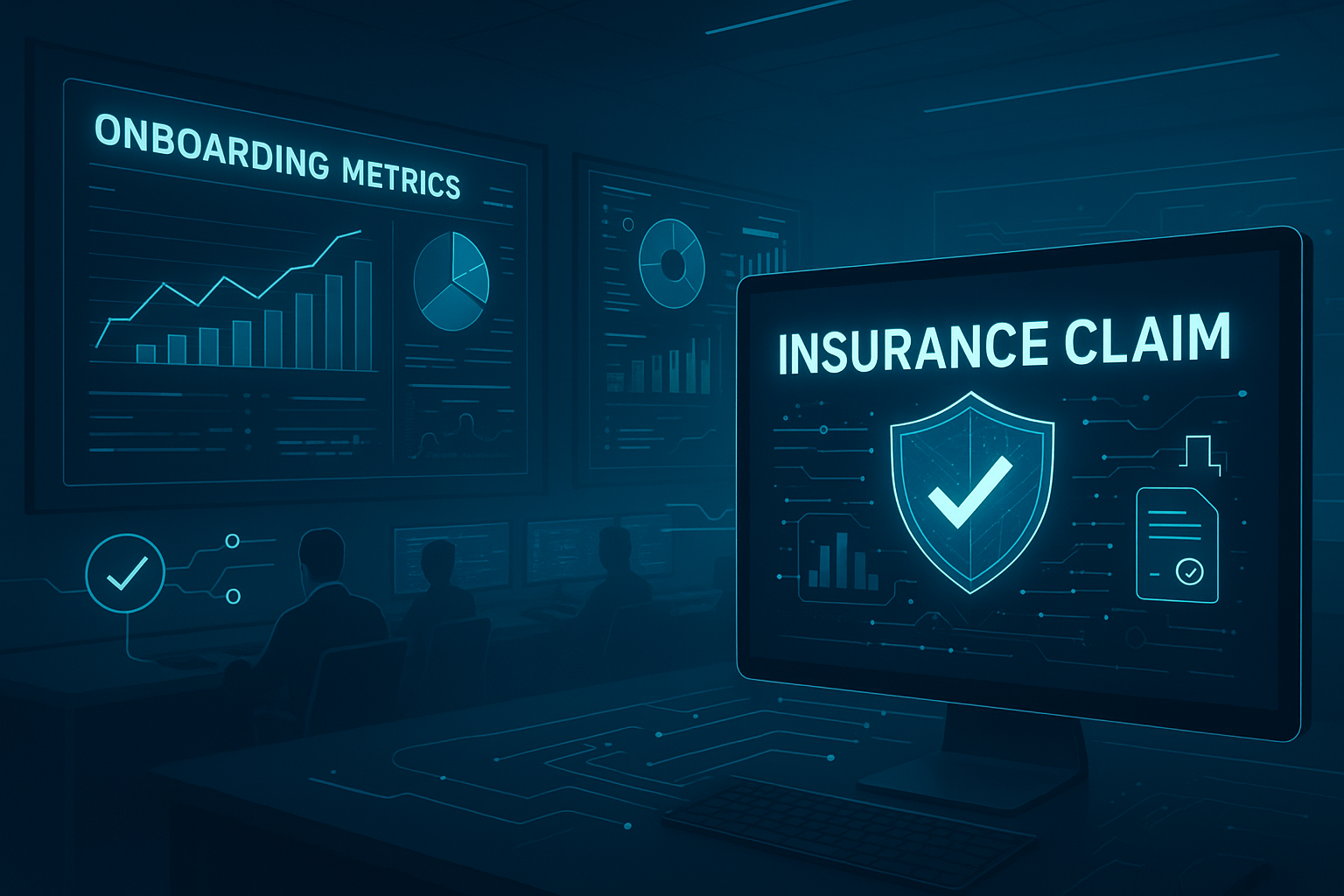
When a regional bank decides to pilot AI, the goal should be focused and measurable. Instead of chasing broad, transformational promises, pick a narrow use case with a clear path to 3–5x ROI: intelligent document processing for mortgage income verification, or call summarization that includes PII redaction to reduce manual handling. Start by aligning stakeholders around business outcomes—cycle time reduction, error-rate drop, cost per case, and an NPS lift tied to faster turnarounds. These metrics keep the pilot honest and make it easier to justify expansion if results are strong.
Governance and risk-first design
From day one embed model risk management for AI in the pilot plan. Put a lightweight AI governance starter kit in place: a use-case intake form, a risk-ranking rubric, documented human-in-the-loop checkpoints, and a list of policy-approved data sources. The governance artifacts don’t need to be exhaustive, but they must be auditable. Capture decision logs, version your data and model artifacts, and retain explainability artifacts so you can show why the model made a recommendation when auditors ask.
Data readiness and privacy
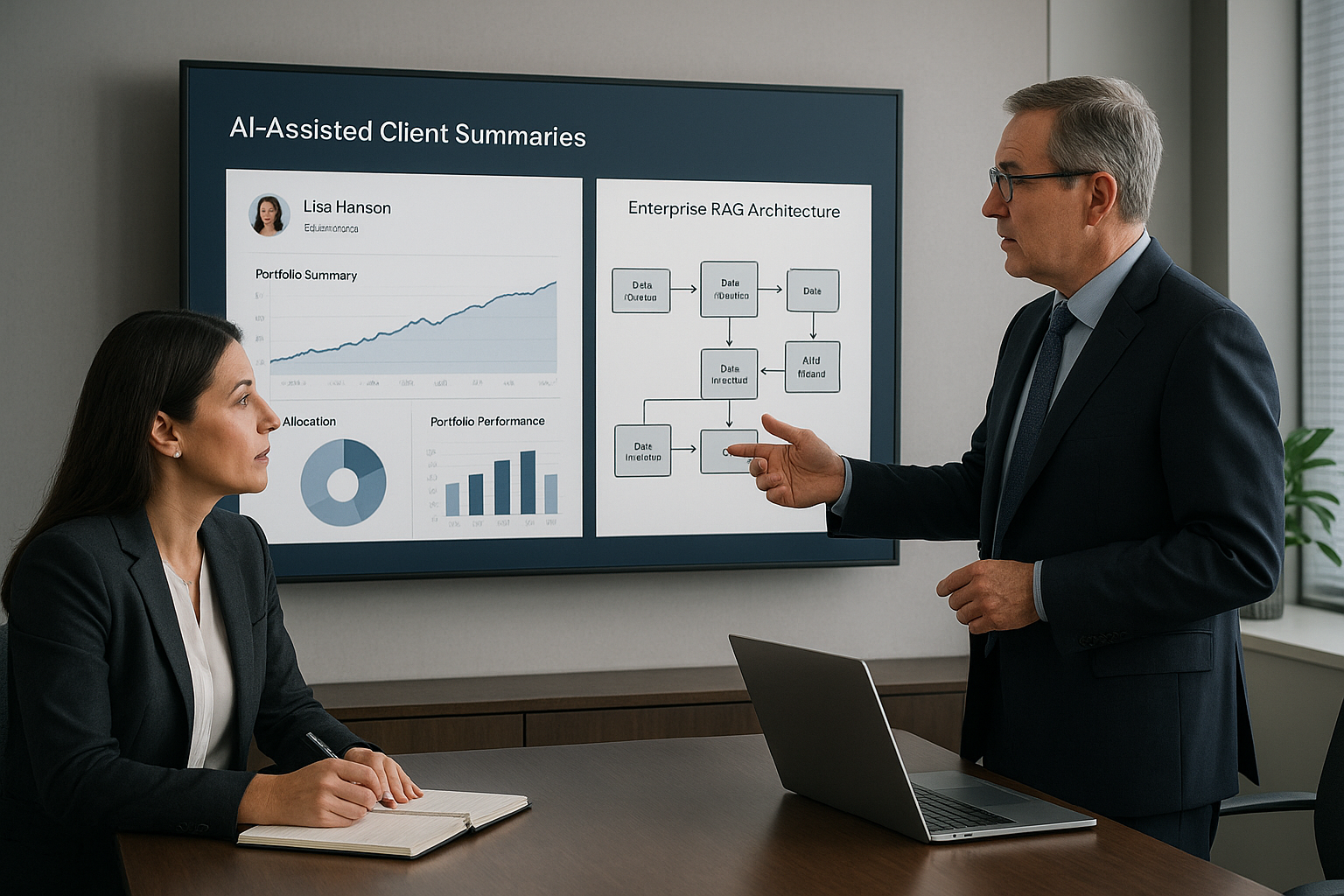
Data is where pilots often stall. Run a quick PII classification and apply masking and redaction rules before you train or query models. Update consent records where necessary and lock down retention rules. A retrieval-augmented generation (RAG) pattern that uses bank-approved knowledge bases keeps the model’s context within known boundaries, reducing leakage risk while enabling compliant generative AI scenarios.
Practical architecture and vendor diligence
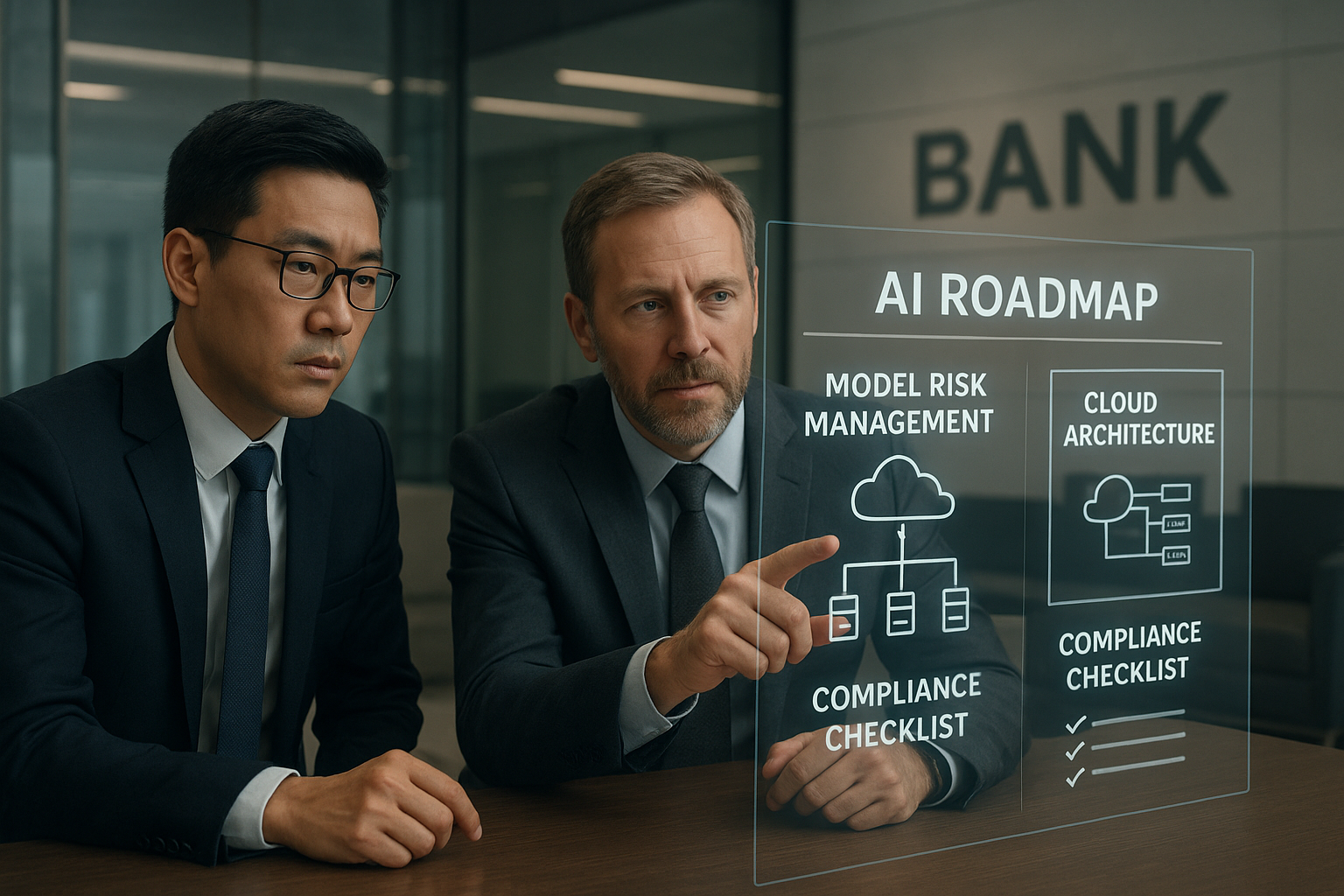
A cloud reference pattern—secure VPC, strict IAM, prompt logging, policy filters, and rate limits—lets you move fast without opening doors. During procurement, require SOC2 or ISO certifications, bank-grade encryption, model cards that surface known limitations, incident response SLAs, and exit clauses that guarantee data portability. Don’t skip documentation: define a validation plan with tests, acceptance criteria, and rollback triggers to meet model risk management for AI expectations.
Operationalizing the pilot
Introduce human-in-the-loop checkpoints early to maintain control and to collect feedback for the model. Train frontline teams on how the AI augments their work, and set up a control room to capture real-time issues. Communicate proactively with compliance and internal audit so the pilot isn’t a surprise. Use leading indicators such as adoption rates and quality trends, and track lagging indicators like cost savings and error reduction. If the pilot delivers the ROI window and the risk posture is unchanged or improved, you have the case to scale.
How we help: we facilitate AI strategy sessions, design compliant reference architectures, implement redaction and ingestion pipelines, and help build pilots end-to-end—all with MRM alignment baked into the delivery process.
Part 2: Scaling AI at Credit Unions—A CTO Playbook for MLOps and Model Risk Management (Credit Unions | Scaling)

Once a credit union has one or two successful pilots, the hard work begins. Scaling from pilots to dozens of services requires a standardized platform, codified processes, and guardrails that make compliant innovation repeatable. Your CTO charter is to industrialize banking MLOps while keeping model risk management for AI operational rather than theoretical.
Platform and data architecture
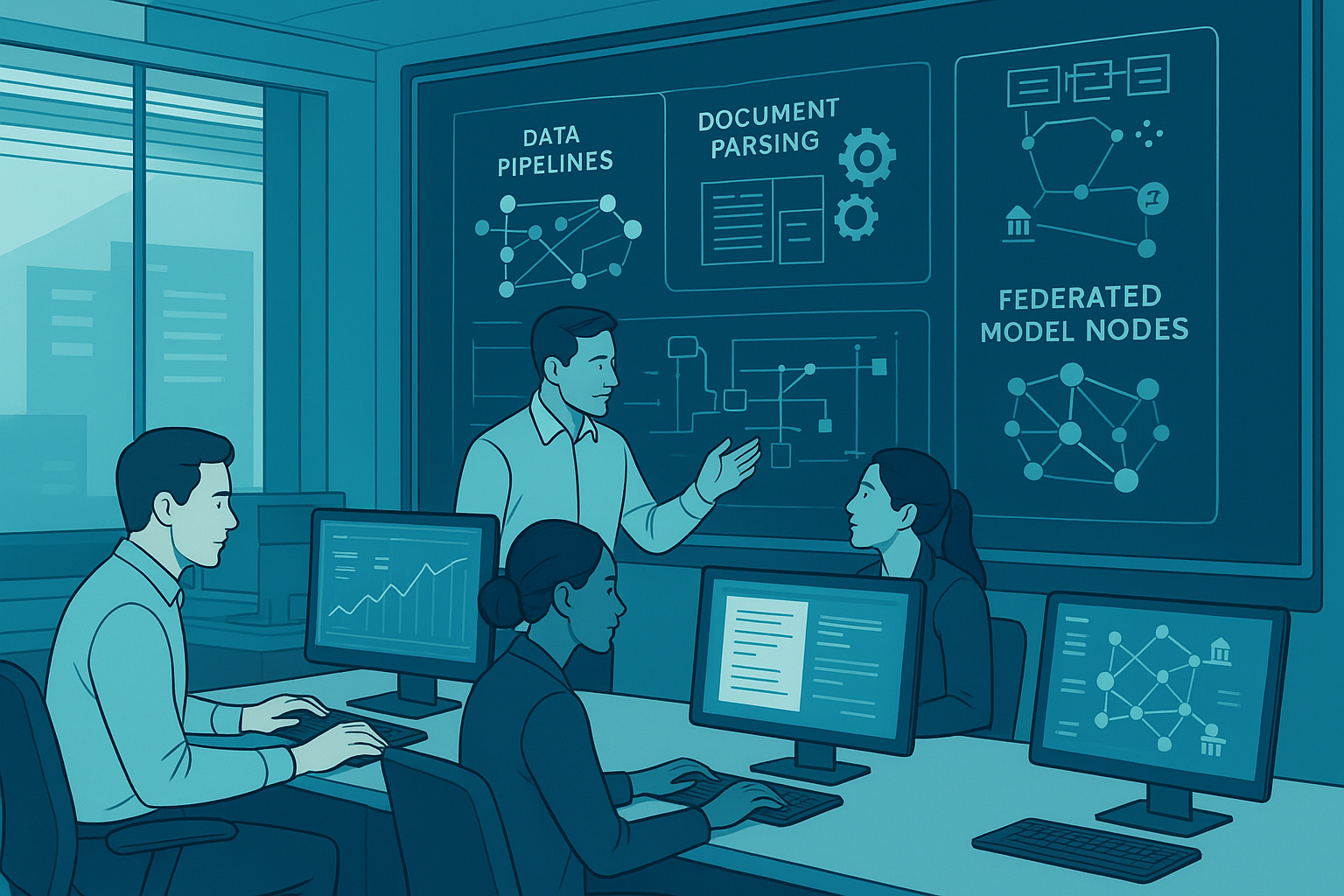
Move to a standardized platform with a centralized feature store, a model registry, a vector database that segments PII, and robust secrets management. This foundation reduces duplication of engineering effort, enforces consistent data handling, and makes it easier to apply organization-wide policies. Segmentation of PII in your vector DB and strict access controls reduce the regulatory exposure that can come from ad-hoc model deployments.
Codifying MRM in the SDLC
Operationalize model risk management for AI by integrating automated documentation generation into CI/CD, implementing champion–challenger testing, and running bias and fairness checks in pre-production. Automated validations—unit tests for model behavior, fairness scans, and performance thresholds—turn MRM from a checklist into code that runs on every commit. Continuous validation and drift detection ensure models remain fit for purpose in production.
Guardrails, observability, and access governance
Guardrails at scale include prompt filters, data loss prevention, content safety checks, and policy enforcement at the API gateway. Observability must capture lineage, prompt and output logging, drift alarms, and cost telemetry by project. Define SLOs for latency and accuracy and instrument dashboards that link model performance to business KPIs. Access governance—role-based controls, privileged session management, and approvals for sensitive data domains—keeps the right people in control without blocking innovation.
Cost governance and model strategy
Cost will balloon without deliberate attention. Implement routing rules that send small, high-volume tasks to efficient embeddings or smaller models, while reserving larger, fine-tuned models for complex decisions. Use autoscaling, quantization strategies, and caching to trim compute costs. Track unit economics by project in a cost dashboard so platform teams and business owners can see ROI in near real time.
Operating model for scale
The organizational model that best supports this is a hub-and-spoke: an AI Center of Excellence that builds platform capabilities and enforces model risk management for AI, with product-oriented teams in the lines of business that own outcomes. Embed an MRM liaison in product squads, and create enablement guilds for standards, tooling, and security. Controlled release processes, sandbox-to-prod promotions, and audit-ready pipelines make regulatory engagement routine rather than reactive.
How we help: we build and operate AI platforms for financial services, integrate MLOps toolchains, automate MRM workflows, and design cost governance blueprints that keep compliant generative AI sustainable as you scale.
Navigating the tension between speed and safety is the defining leadership task for CIOs and CTOs in financial services today. By starting with a narrow, measurable pilot that embeds model risk management for AI, and then maturing into platform-driven banking MLOps with strong observability and guardrails, banks and credit unions can unlock the promise of intelligent automation without increasing regulatory or operational risk.