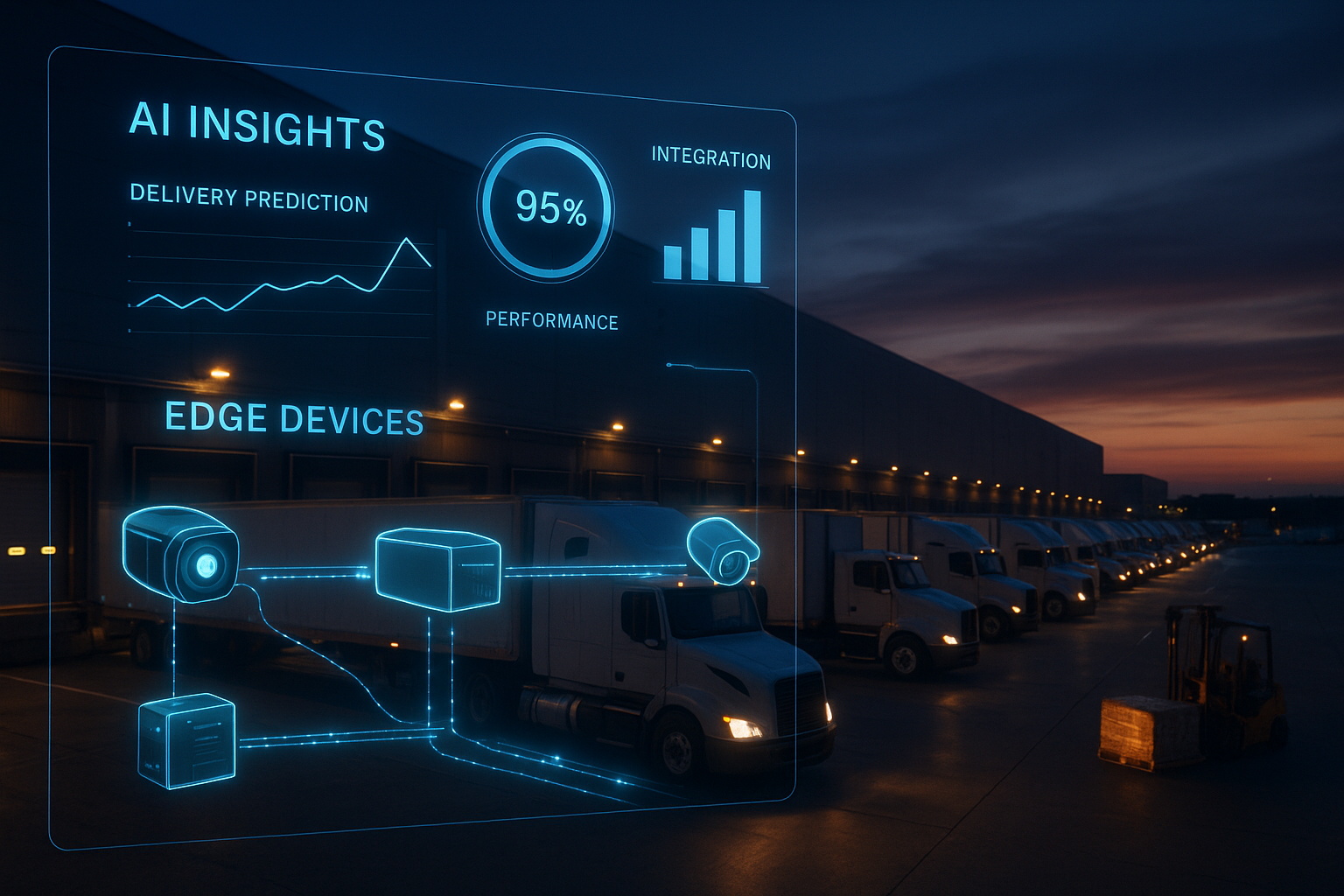
Scaling Grid Intelligence: MLOps and Edge Orchestration for Energy & Utilities

CTOs and operations directors know the pattern: promising edge AI pilots deliver value in isolation, but the leap from ten units to tens of thousands exposes difficult gaps. Heterogeneous hardware, intermittent connectivity, and strict regulatory controls turn what looked like a simple deployment into a complex systems engineering problem. The good news is that utilities can cross this chasm by combining grid intelligence MLOps with robust edge orchestration and secure OTA pipelines that respect safety, privacy and auditability.

From Pilots to Fleet‑Scale Edge Models

Pilot projects often succeed where conditions are controlled and stakeholders are aligned. At fleet scale, however, differences in substations, feeders and distributed energy resources (DERs) create variability in telemetry, firmware, and environment that breaks naive deployments. Edge AI utilities programs need a standard image and telemetry pipeline that normalizes sensor streams and telemetry into a shared feature schema. A versioned model registry and repeatable CI/CD pipelines are essential so that every artifact — model weights, preprocessing code, and container images — is auditable and reproducible.

Think of the model lifecycle as a loop: develop, validate, deploy, monitor, retrain. Each step must be automated with gates for safety and compliance. When you bake grid intelligence MLOps into that loop, you get consistent rollouts across substations, predictable rollback behavior, and the ability to track lineage for every decision a model makes at the edge.

Reference Architecture for Utility Edge AI

A layered architecture balances central control with local resilience. At the substation and feeder level, deploy hardened edge nodes with GPU/TPU options where high-throughput inferencing is required. These nodes run signed containers and local preprocessing so only derived features are sent upstream. Secure data diodes and PKI-backed device identities enforce one-way or tightly controlled flows between OT and IT domains, while zero-trust segmentation limits lateral movement and exposure.

Layered reference architecture diagram showing cloud control plane, substation edge nodes, secure data diode, and local failover, clean modern infographic style
Layered reference architecture: cloud control plane managing orchestration and local resilient edge nodes with secure data flows.

Above the field is a cloud control plane that manages orchestration, model registries and global policy. This plane schedules OTA updates, manages rollout cohorts by region and risk tier, and stores audit trails. Crucially, local failover modes must allow continued inference during backhaul outages, preserving safety functions and time-critical analytics.

MLOps for Regulated Environments

Regulators and internal risk teams require demonstrable traceability. Implement model lineage tracking, immutable feature stores and test harnesses that run pre-deployment checks against historical and synthetic worst-case data. Change management processes — including CAB approvals and clear rollback procedures — reduce operational risk and meet compliance expectations.

Before production, bias, stability and drift tests should be part of the gating criteria. Grid intelligence MLOps frameworks enforce those gates automatically so that only models meeting measurable thresholds move to live feeders. This discipline makes audits simpler and gives operations teams confidence to lean on automated detection and decision support.

Monitoring and Drift Management at the Edge

Telemetry design influences whether you detect problems early or only after outages occur. Shadow mode and canary releases allow new models to run alongside incumbent models without impacting control decisions, giving you a safe space to compare performance in real operating conditions. For critical feeders, phased canaries reduce blast radius while validating model behavior.

Operations center with dashboards showing drift monitoring edge models, model lineage, and OTA update status, realistic control room photography
Operations center dashboards for drift monitoring, model lineage, and OTA update status used to validate behavior before wide rollouts.

Drift monitoring edge models requires lightweight on-device statistics and upstream aggregations that trigger alerts when feature distributions shift. Semi‑supervised labeling programs and periodic human-in-the-loop review help close the feedback loop. Tie model SLOs to operational KPIs — such as SAIDI/SAIFI improvements or outage prediction hit rates — so performance tracking aligns with business goals.

Secure OTA Updates and Patch Management

Operating at scale demands a secure, phased OTA strategy. Use signed containers, supply chain metadata like SBOMs, and automated vulnerability scanning to ensure each release is safe to deploy. Rollouts should be staged by region, asset criticality, and risk tier with automatic rollback triggers for anomalous telemetry.

Design updates to be resilient: if backhaul is lost, local inference must continue with previously validated models and configurations. This approach balances the need for rapid updates with operational continuity, a core requirement for edge AI utilities deployments.

Data Minimization and Privacy

Utilities must balance model accuracy with privacy, bandwidth and storage costs. On-device preprocessing that sends features rather than raw streams dramatically reduces data movement and exposure. Federated learning can be considered for scenarios where training on-device avoids centralizing sensitive data, but it adds complexity in version management and drift handling. Retention policies must be aligned with regulatory rules and operational needs — keep what you need for validation and audits, and prune the rest.

Workforce Readiness and Change Enablement

Technology alone won’t change outcomes; operators must trust the systems. Provide tiered runbooks and simulator-based training so field techs and dispatchers can practice interacting with AI-driven alerts. Define human-in-the-loop escalation thresholds and feedback channels that allow operators to flag false positives and contribute labeled data. Over time, these operator feedback loops become a source of continuous improvement for both models and operational playbooks.

Business Case and Investment Plan

To secure funding, map technical outcomes to financial metrics. Quantify the impact on SAIDI/SAIFI, show reductions in truck rolls and faster outage isolation times, and model inventory and vegetation management savings from more targeted inspections. Build a CapEx/OpEx model for a 24‑month rollout that phases pilot consolidation, platform build, and fleetwide orchestration. Present clear ROI scenarios to boards and regulators to unlock investment for scale.

Scale Roadmap and Partner Model

Scaling grid intelligence requires new organizational constructs. Establish a Center of Excellence to own standards, tooling, and vendor management. Create a platform engineering team to run the control plane and an operations team to manage edge fleets. Use a vendor scorecard that evaluates MLOps capabilities, edge security, upgrade velocity and long-term support commitments.

For teams ready to move from point solutions to fleet-scale impact, consider a two-part engagement: a Grid AI scale assessment to map current state and constraints, followed by an orchestration build that delivers model registries, secure OTA pipelines and drift monitoring at scale. That combination aligns strategy with delivery and reduces the time to measurable outcomes.

Deploying edge AI at grid scale is a multidisciplinary challenge that touches engineering, security, compliance and operations. When you standardize on grid intelligence MLOps, pair it with secure OTA updates utilities can trust, and instrument comprehensive drift monitoring edge models depend on, you convert pilots into durable production programs. The organizations that succeed will be those that treat AI as a platform: versioned, auditable, and operable at scale across substations, feeders and DERs.

If your roadmap includes expanding edge AI across the network, start with a targeted assessment that evaluates device heterogeneity, connectivity constraints, and regulatory risk — and build an orchestration strategy that makes secure, scalable updates and drift management the norm rather than the exception.

Clinically Safe Edge AI in Hospitals: Triage, Bed Management, and HIPAA‑Compliant IoT

Hospitals today are under pressure to do more with less: faster admissions, fewer falls, and better utilization of beds and staff. Edge AI offers a pragmatic path to immediate operational uplift without the privacy and bandwidth risks of sending every data stream to the cloud. For CIOs and IT directors starting out, the first question is often not whether the models work, but whether they can be deployed in a clinically safe, HIPAA-compliant way that actually integrates into nursing and operations workflows. This article lays out a compact, practical plan to deploy privacy-preserving edge AI in hospitals for triage, bed management, and ambient monitoring while aligning with clinical governance and security requirements.

Where Edge AI Fits in Clinical Operations

The most successful early deployments of edge AI healthcare are those that solve high-value, low-risk operational problems at the unit level. Think of use cases that improve throughput and patient safety without directly making clinical diagnoses: predicting unit-level bed availability to prioritize admissions, using ambient monitoring to detect fall risk in patient rooms with non-PHI video, or running on-premise OCR to accelerate paper or printed form intake at triage.

Hospital patient flow AI, when deployed at the edge, can infer bed turn-around time from environmental and workflow signals, surface predicted availability to charge nurses, and integrate with bed management boards. Because inference happens on-device, sensitive data need not leave the hospital network, reducing exposure and support burden. For ambient monitoring, privacy-preserving computer vision healthcare approaches can transform raw camera feeds into anonymized events—standing, sitting, fall-prone movement—before anything is logged or transmitted.

Diagram of HIPAA-aligned edge AI architecture for hospitals: on-device inference, private subnet, audit logging, BAA layer, EHR/FHIR integration; clean schematic, corporate style
HIPAA-aligned edge AI architecture showing on-device inference, private subnet, audit logging, and EHR/FHIR integration.

Privacy by Design: HIPAA‑Aligned Architecture

Privacy-preserving architectures rely on ‘process first, send less’ principles. HIPAA edge computing strategies should begin with on-device redaction and local inference. Cameras and sensors should be configured to process frames locally, discard raw images immediately, and only forward structured, de-identified events. When PHI must be used for model improvement or audit, a clear de-identification pipeline and explicit patient consent path are required.

Network architecture matters. Place edge devices on private subnets with firewall rules that restrict outbound connections, enforce mutual TLS for any upstream telemetry, and log all access centrally. Least-privilege identity and access controls reduce risk, and Business Associate Agreements (BAAs) must be tailored to include edge-specific vendors and maintenance providers. Define retention policies up front: short windows for event logs, strict retention and deletion for any derived artifacts, and auditable procedures for retrieval under legal or clinical review.

Clinical Safety and Human-in-the-Loop

Clinical safety is earned through design. Edge AI should be a clinical assistant, not a replacement decision-maker. Incorporate fail-safe routing for alerts so that devices escalate through nurse call systems or secure messaging rather than delivering raw alarms directly. Confidence thresholds are essential: allow models to suppress low-confidence alerts and route ambiguous events to a human triage queue.

Building clinician trust requires simulation and measurement. Before full activation, run alarm simulations in controlled settings and measure nuisance rates. Track precision and recall for fall alerts and surface audio or visual explanations when possible so clinicians understand why an alert fired. Human-in-the-loop workflows should include easy overrides and a clear feedback channel to capture clinician corrections, which can feed back into labeling and continuous model improvement under governance.

Data Readiness and Model Governance

Data readiness is often underestimated. Labeling workflows must involve subject-matter experts—nurses and biomed techs—to ensure annotations reflect clinical reality. All datasets used for training or validation should be de-identified and cataloged with provenance. Maintain model cards that state intended use, contraindications, and performance envelopes in the hospital context.

Post-deployment surveillance is not optional. Edge models can drift due to changing patient populations, new devices, or workflow changes. Implement scheduled drift checks, anomaly detection on event distributions, and a rollback plan for failing models. Governance should include a review cadence with clinical leads and IT to approve retraining or parameter changes.

Integrations with EHR and RTLS

To drive measurable impact, edge AI outputs must connect to existing workflows. Use FHIR APIs to publish reliable bed status updates to the EHR or bed management systems, and integrate with RTLS for asset and staff location correlation to improve context. For example, when a bed change is predicted, correlating RTLS data about cleaning staff movement can automate a ticketing workflow to biomed or environmental services.

Operational integration also means connecting to service desk tools. Device health alerts and software patch requirements should flow into existing ticketing systems so biomed and IT can manage lifecycle without adding bespoke processes.

Pilot Playbook and Metrics

A pragmatic pilot runs 60–90 days and follows a shadow-first approach. Start in shadow mode to collect baseline metrics and validate model performance without influencing care. Use A/B techniques by unit where feasible to measure real impact. Key operational KPIs include admissions cycle time, bed turn-around time, and precision/recall for fall alerts. Track alert response time and nursing workload to detect early signs of alert fatigue.

Pilot timeline graphic showing 60-90 day playbook phases: discovery, shadow mode, A/B testing, go-live criteria; annotated with KPIs like admissions cycle time and fall alert precision; simple, business-oriented
60–90 day pilot timeline with discovery, shadow mode, A/B testing, and go/no-go criteria annotated with target KPIs.

Define clear go/no-go criteria: acceptable nuisance rate, measurable reduction in bed idle time, or demonstrable improvement in admission throughput. Maintain a stakeholder cadence with Nursing Leadership, Biomed, and IT throughout the pilot to address issues quickly and maintain buy‑in.

Training Clinical and IT Teams

Training is role-based and focused. Clinician quick guides should explain the meaning of alerts, how to override them, and how to provide feedback that improves model performance. Include alert fatigue mitigation practices—such as rate limiting and escalation tiers—so nursing teams can trust the system.

IT and biomed need operational playbooks for patching, secure device onboarding, and device hygiene. Biomed involvement is crucial for hardware lifecycle management and warranty coordination. Offer blended training sessions combining short simulations with reference materials to accelerate adoption.

Procurement and Vendor Risk

Procurement for edge AI requires security questionnaires tailored to on-prem devices: ask about on-device encryption, over-the-air update mechanisms, local logging capabilities, and BAA terms that include field engineers. Evaluate CapEx versus OpEx options and factor in device refresh cycles into total cost of ownership. Require SLAs for on-prem support and clearly define escalation matrices and response times for device failures that impact patient safety.

Next Steps and Engagement Model

Start with a governance checklist and RACI that names clinical owners, IT stewards, and vendor responsibilities. A scoped Edge AI readiness assessment can rapidly highlight high-value, low-risk pilot targets, identify network and privacy gaps, and produce a prioritized roadmap. From an initial operational pilot, you can expand into clinical decision-support areas only after clinical validation, robust governance, and clear safety cases are documented.

If your health system is considering a first pilot, consider a structured readiness assessment that covers architecture, data readiness, clinical governance, and integration points. With the right privacy-preserving design and clinician partnership, edge AI healthcare can deliver measurable operational improvements while maintaining HIPAA edge computing compliance and clinical safety.

For practical help mapping a 60–90 day healthcare AI strategy pilot, including AI strategy, process automation, clinical/IT training, and secure AI development, contact a partner experienced in hospital deployments to co-create a roadmap and governance plan tailored to your organization.

Smart Field Operations in Government: Edge AI for Inspections and Public Safety

When agency leaders begin to imagine smarter, faster field operations, they often picture cloud-only systems and streaming cameras. Real-world government work rarely has perfect connectivity or permissive procurement windows. That’s why government edge AI — models and analytics that run directly on mobile and fixed devices — is becoming central to modernizing inspections, permitting, and public safety. This article walks through practical design choices for deploying offline-capable, secure edge AI across municipal and state programs, while honoring procurement, transparency, and records requirements.

Edge AI Opportunities in Government Services

There is a long list of high-value, citizen-facing use cases that get immediate benefit from on-device intelligence. For permitting and benefits workflows, on-device document OCR can extract names, addresses, permit numbers and dates even when an inspector is offline. On-device OCR government deployments reduce time spent on manual transcription, lower error rates and ensure that data capture happens at the point of service rather than after a long backlog.

Inspector photographing a building permit document with a mobile device performing on-device OCR; UI elements show extracted fields and an offline icon
On-device OCR: a field inspector captures a permit and the mobile app extracts key fields while offline.

Code enforcement and mobile vision assist are another natural fit. When a field officer is inspecting a property, a mobile vision model can highlight violations in real time, flag missing permits, or identify hazards without relying on persistent connectivity. That real-time assistance accelerates inspection cycles and improves officer safety.

Public safety workflows benefit from on-edge processing for sensitive media. Bodycam redaction AI edge capabilities allow redaction and preliminary transcription to occur on the device itself, protecting privacy while preserving critical evidence. With on-device redaction and selective cloud uploads, agencies can adhere to privacy rules and reduce the amount of raw personally identifiable footage transmitted across networks.

Close-up of a body-worn camera with an AI redaction overlay showing blurred faces and license plates in an urban public safety context
Bodycam redaction on-device: privacy-preserving processing reduces transmission of identifiable footage.

Operating Under Constraints: Policy, Procurement, and Transparency

Government deployments must align with procurement rules, records retention law, and freedom of information obligations. Start by mapping the technical architecture to compliance checkpoints: ensure components that must be FedRAMP or StateRAMP approved are identified, and isolate local edge processing from cloud services that require higher assurance. Those decisions shape vendor selection and contracting vehicles.

Transparency is more than a checkbox. Publishing accessible model factsheets, documenting why decisions are automated versus human-reviewed, and making audit logs available for FOIA requests all demonstrate government AI governance transparency in practice. Plan procurement language to require auditable workflows, and embed appeals and human review processes so citizens can contest automated outcomes.

Security and Privacy at the Edge

Edge deployments change the security perimeter — the device becomes a crown jewel. Device management (MDM), zero-trust access patterns, local encryption of model weights and captured evidence, and tamper detection are essential. When connectivity is intermittent, devices must queue data securely and implement eventual consistency patterns so that evidence chains remain intact when syncing resumes.

Privacy-preserving techniques, such as running redaction and transcription locally and uploading only metadata or redacted assets, reduce risk and bandwidth. For bodycam redaction AI edge scenarios, ensuring that initial redaction happens before any network transmission protects both individuals and the agency from premature disclosure.

Workflow Automation Around AI Outputs

Artificial intelligence should accelerate administrative work without removing human control. Design processes so that reliable model outputs auto-populate case files, but route exceptions and low-confidence predictions to supervisors for review. Include geotagging and secure time-stamping to maintain a defensible evidence chain, and ensure each automated action produces a clear audit trail.

For eligibility checks or fraud flags, establish configurable thresholds so that AI acts as a decision support layer rather than an absolute adjudicator. When a model raises a fraud flag, the system should package the AI findings alongside the original captured evidence for human reviewers, preserving clarity and fairness in the decision process.

Pilot Design and Community Engagement

Pilots remain the best way to validate assumptions, but they must be transparent and inclusive. Publish model factsheets and plain-language descriptions of what the pilot will and will not do. Hold community demos and technical briefings so citizens and stakeholder groups understand how data will be used and protected. Provide training to frontline staff and create clear channels for feedback from unions, community groups, and civil rights stakeholders.

Define pilot metrics in advance: throughput, accuracy, user satisfaction, and impact on equity. Collect qualitative feedback from field staff who will use on-device OCR government tools or bodycam redaction AI edge workflows, and iterate on UIs so that the technology amplifies human expertise rather than complicating it.

Data Governance and Model Risk

Bias testing must be an operational discipline, not an afterthought. Test models across relevant demographic and environmental dimensions to identify disparate impacts. Implement appeals and human review protocols for any action that affects access to benefits or enforcement outcomes. Independent oversight, whether through ethics boards or third-party audits, provides an additional layer of trust and helps operationalize government AI governance transparency.

Data retention policies need to be explicit: decide what is stored on-device versus centrally, how long raw footage and transcriptions are retained, and how deletions are verified. Clear retention rules simplify FOIA responses and reduce long-term storage liabilities.

Interoperability with Legacy Systems

Edge AI is rarely a greenfield project. It must integrate with case management systems, 311/CRM platforms, and records archives. API gateways and event streaming are the preferred integration patterns, but where APIs are missing, robotic process automation can bridge gaps temporarily. Build adapters that translate the compact, structured outputs from on-device OCR government tools into the canonical fields expected by legacy systems.

Design for incremental integration: begin by shipping structured metadata and redacted assets, and gradually expand to richer data exchange once the records and security posture are settled. This reduces program risk and makes it easier to secure necessary approvals.

Scaling Plan and Vendor Collaboration

Successful scaling depends on reusable components and a shared services mindset. Create a cross-agency center of excellence to manage common concerns like model governance, security baselines, and vendor evaluation. Contracting vehicles such as BPAs and SaaS agreements tailored for government speed can accelerate procurement while preserving compliance.

From an operational services perspective, agencies will benefit from an offer that combines AI strategy, process automation coaching, AI training for field staff, and secure AI development that aligns with government standards. A field-ready kit for discovery and pilot readiness — focused on on-device OCR government, bodycam redaction AI edge workflows, and public sector inspections automation — helps agencies move from concept to safe, auditable operations.

Edge AI for government field operations is not a futuristic novelty; it’s a practical pathway to faster inspections, safer public safety work, and more responsive citizen services. By designing for offline capability, strong governance, and seamless integration with existing systems, agencies can deliver measurable improvements without trading away transparency or legal compliance. If your agency is building a roadmap, consider a phased discovery that covers policy mapping, technical proof points, and staff training so that deployments are both effective and trustworthy.

To explore an Edge AI discovery and field pilot kit tailored to government requirements — including guidance on government AI governance transparency, secure on-device workflows, and procurement-aligned architectures — contact our team for a brief consultation and next steps.

From Telematics to Real‑Time Autonomy: Building an Edge AI Stack for Fleet and Logistics

When telematics first became ubiquitous across fleets it delivered a steady drumbeat of incremental improvements: location, speed, harsh braking alerts, and maintenance flags. For many logistics organizations those wins started to plateau. The data was there, but the actions were not: GPS pings and back-office reports rarely translated into real-time operational autonomy on the road or in the yard. For COOs and CTOs committed to scaling AI across their operations, the next wave is about moving from telematics to edge intelligence — an architectural and organizational shift that turns sensors into decision agents and systems into closed-loop automation.

Close-up of an in-cab driver monitoring device with an AI HUD overlay indicating driver alertness and fuel-optimization suggestions. Clean, realistic.
In-cab driver monitoring device with AI overlays for alertness and fuel-optimization.

The Shift from Telematics to Edge Intelligence

Telematics gave fleets situational awareness. Edge intelligence turns that awareness into short-latency, context-rich decisions. Beyond GPS and alerts, the vehicle itself can perceive and act: driver monitoring, ADAS add-ons, and local fuel optimization models can reduce incidents and improve mpg without waiting for a central server to respond. Likewise, warehouse and dock cameras evolve from passive recorders into edge agents that detect trailer IDs, measure dwell time, and trigger automatic door assignments. Crucially, the ROI accelerates when you adopt platform thinking — a unified event model that treats vehicle and facility edges as peers feeding a consistent stream of events into TMS and WMS systems.

Reference Edge Stack for Fleet and Hubs

A practical edge AI stack blends lightweight compute at endpoints with robust orchestration. On vehicles, that stack includes driver monitoring cameras, ADAS sensors, an edge compute box that runs quantized perception and fuel optimization models, and a secure connectivity module. In hubs, purpose-built dock cameras and short-range sensors become the eyes for yard automation. The orchestration layer routes events to TMS/WMS with low-latency SLAs so that a detected trailer ID and predicted dwell can immediately influence scheduling and routing. When you design for fleet edge computing AI, think in terms of event streams and command streams: events flow up and across, commands flow down and laterally.

Warehouse dock camera view showing trailer ID recognition and auto-assigned dock doors, with visual overlays and low-latency latency indicators. Industrial setting, high detail.
Dock camera detecting trailer IDs and auto-assigning dock doors to reduce dwell time.

Model Portfolio and A/B Testing in the Wild

At scale you will manage dozens of models across domains and geographies. That portfolio should include region-specific variants tuned for different weather and road conditions and domain-adapted models for particular trailer types or terminal layouts. You need safe experiment mechanics — canary rollouts and A/B testing — to compare routing models or safety interventions under live traffic. Implementing A/B testing edge models routing means instrumenting key metrics at the edge and in aggregate: incident rate, mpg, on-time performance, and dwell reduction. Metrics must be observable in near real time so you can roll back or promote models based on statistically significant changes, not gut instinct.

Cost and Reliability Engineering

Edge deployments change the cost equation. Model compression and quantization reduce CPU/GPU requirements and extend battery life, while smart bandwidth management — store-and-forward patterns and prioritized telemetry — control connectivity costs. Reliability engineering covers both software and hardware: device lifecycle planning, spare pools for edge boxes, and defined RMA processes reduce downtime. Design for graceful degradation so that if an edge model or connectivity fails, critical safety alerts still reach command centers and drivers. Optimizing TCO while improving resilience is a balancing act of right-sizing compute, telemetry cadence, and field support.

Automation that Moves the Needle

Automation delivers value when it closes the loop: predictions become actions that change outcomes. For terminals and DCs, warehouse dock automation vision can detect incoming trailers, auto-assign dock doors, and route yard tractors dynamically to cut dwell times. On the fleet side, edge models can trigger proactive maintenance tickets and parts pre-pick in the nearest service hub, reducing unplanned stops. Edge vision also creates reliable documentation for claims and compliance by capturing tamper-evident footage and metadata. The difference between analytics and operational impact is whether insights produce automated, measurable changes to day-to-day workflows.

Security, Compliance, and Driver Trust

No edge program scales without addressing privacy and security. Drivers must see transparent policies about what is recorded, how long data is retained, and how it’s used. Privacy-preserving monitoring — local anonymization or selective upload — lowers resistance and aligns with regional regulations. On the technical side, zero-trust device identities, mutual TLS, and key rotation are baseline requirements; incident forensics require immutable chain-of-custody for edge data so you can support audits and claims. Building trust is both a governance and design exercise: make consent, auditability, and minimal exposure defaults in your architecture.

Operating Model and Training at Scale

Edge AI changes roles on the ground. Dispatchers become decision partners with models; terminal staff manage sensors as operational assets. Training programs must be role-specific, combining simulator drills for drivers and playbooks for command centers to handle exceptions. Create command center playbooks that map model outputs to human actions and escalation paths. Identify change champions in terminals and DCs who can pilot process changes and disseminate best practices. Without intentional training and change management, even highly accurate models will underperform in production.

Scale Plan and Vendor Strategy

Scaling from pilot to enterprise requires a phased, measurable roadmap. A typical 12–18 month plan moves from proof-of-value at a handful of sites to a regional rollout and then full fleet integration, with a calibrated CapEx/OpEx mix and clear ROI milestones. Use vendor scorecards that evaluate not just model accuracy but edge runtime efficiency, security posture, and serviceability. Standardize SOW templates around SLAs for latency, model lifecycle, and fault remediation. For organizations that lack in-house edge experience, an Edge AI platform assessment plus a pilot-to-scale program can shorten the learning curve and de-risk the expansion.

Moving from telematics to real-time autonomy is both technical and cultural. For COOs and CTOs, the practical path is clear: evolve your stack to support fleet edge computing AI, invest in warehouse dock automation vision, and operationalize experiments with rigorous A/B testing edge models routing strategies. When TMS WMS AI integration is treated as an event-driven program rather than a set of point integrations, the organization gains the low-latency control needed to improve safety, MPG, and throughput. If your goal is scaling AI from point improvements to platform-level transformation, start with an assessment that maps your devices, events, and operating model — and build the edge-first roadmap that turns telematics data into autonomous action.

If you’d like help mapping an edge-first roadmap or running a pilot assessment, contact us to get started.